Lab Day: 5 Agentic AI Prototypes in One Day
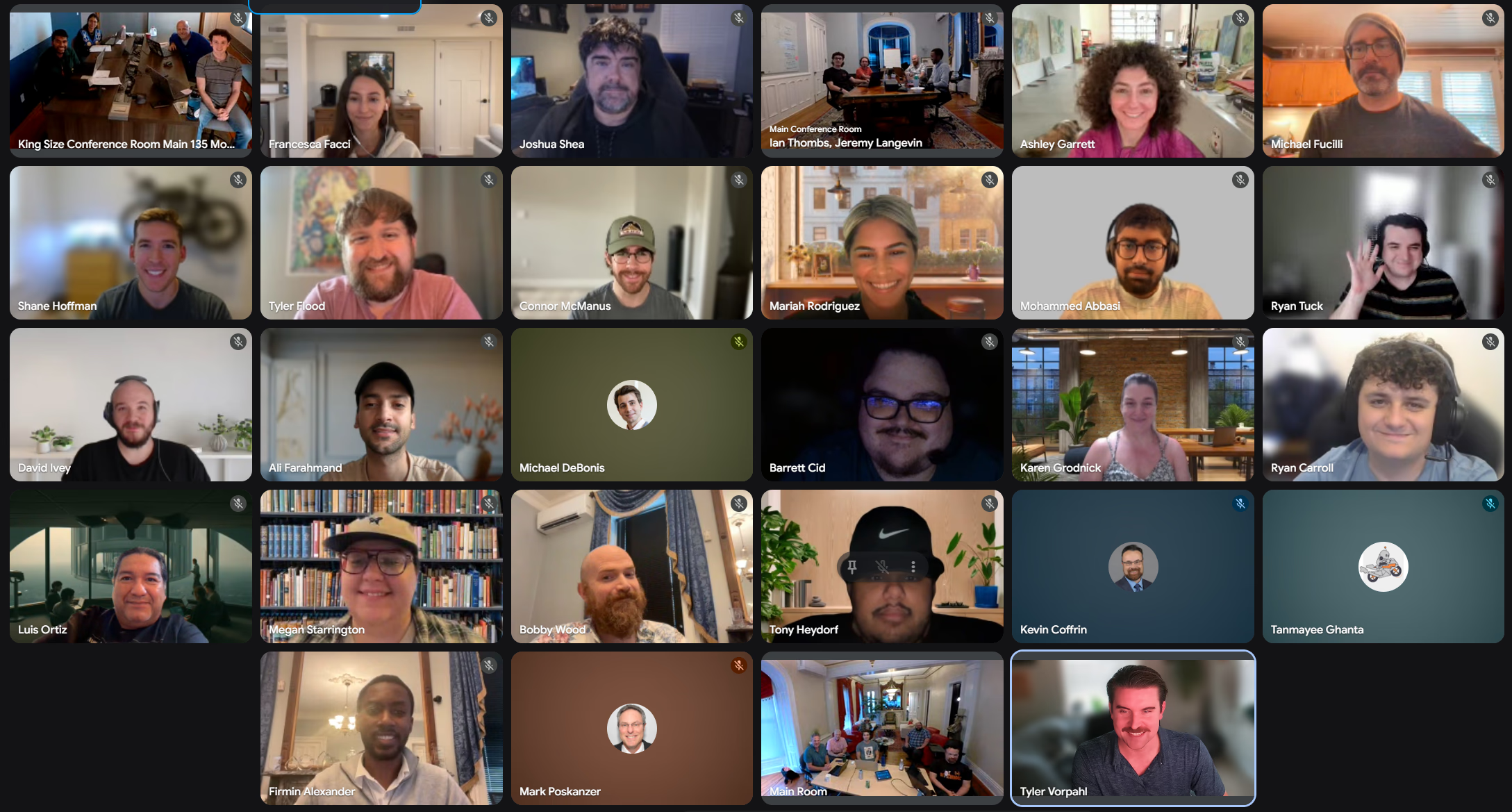
What happens when a software company closes for a day to build AI agents for common business workflows? We closed our offices for one full day, remote and in the office, and split into five teams for an internal AI hackathon to find out.
5 Common Business Problems
Every organization has workflows that take more time than they should: responding to new opportunities, keeping back-office records accurate, capturing what was decided in meetings, greeting website visitors, and turning requests into code changes. For Lab Day, each team took one of these common business problems and had a day to build an agentic workflow for it, using our own processes as the test bed.
Every team also had to measure what its agent would cost to run at a realistic volume. An agent that works but costs too much to run isn’t a solution.
- Harvest Moon
- The Fine Print
- The Welcome Wagon
- Ticket To Ride
- TLDR
5 Unique Agentic Solutions
All five teams finished the day with a working prototype, demoed live to the whole company. Every agent hands its output to a person for review before anything goes out. Teams drew on the agentic patterns from our company-wide training, including planning and decomposition, tool selection, multi-agent collaboration and self-critique. Across all five agents, running costs per run ranged from $0.10 to $0.85.

Catching errors in back-office records
Small errors in back-office records are easy to miss and costly to fix later. This prototype reviews records for errors and gaps and flags anything that needs attention before it goes out. A person resolves every flag.

Completing forms and requirements
Detailed forms and requirements documents usually start from a blank page, even when most of the answers already exist somewhere in a company’s records. This prototype drafts first-pass answers from existing company information, so people start from a draft instead of from scratch. A person reviews and edits every answer before it goes anywhere.

Meeting recaps 2.0
Decisions and action items get lost when no one has time to write up a meeting. This prototype drafts a recap of what was discussed and decided. A person reviews every recap before it’s shared.

Greeting website visitors
Most website visitors leave without ever starting a conversation. This prototype starts that conversation and helps visitors find the right next step, with a person reviewing its responses. It ran in a test environment and isn’t live on our site.

Turning requests into code changes
Small change requests arrive by email and chat and can pass through several handoffs before a developer starts work. This prototype turns a request into a draft code change, ready for a developer to review, adjust and approve.
The Principals > The Outputs
Lab Day produced five working prototypes, but the prototypes were never the point. The day was a full-speed test of the same discipline we apply before any new technology reaches a client project. Whatever workflow a team took on, the same three lessons held:
A person reviews every output
Agents do the first pass; people make the call.
Measure the cost before you build.
A real run, multiplied by real frequency
Train everyone, not just developers
A shared vocabulary is what lets a whole company build in a day.

We spent months in agentic workflow training. A lot of us came out of it Claude certified (CCA-F), and Troy Web is now a Certified Claude Partner. Lab Day was our mini hackathon to put all of that to use. What impressed me most was how people paired up with teammates they don't usually work with and took on some challenging, unusual problems. By the end of the day we had five working prototypes. It's a great reminder of what we're capable of when we put our heads together, and it's how we want to take on our clients' hardest problems too.”
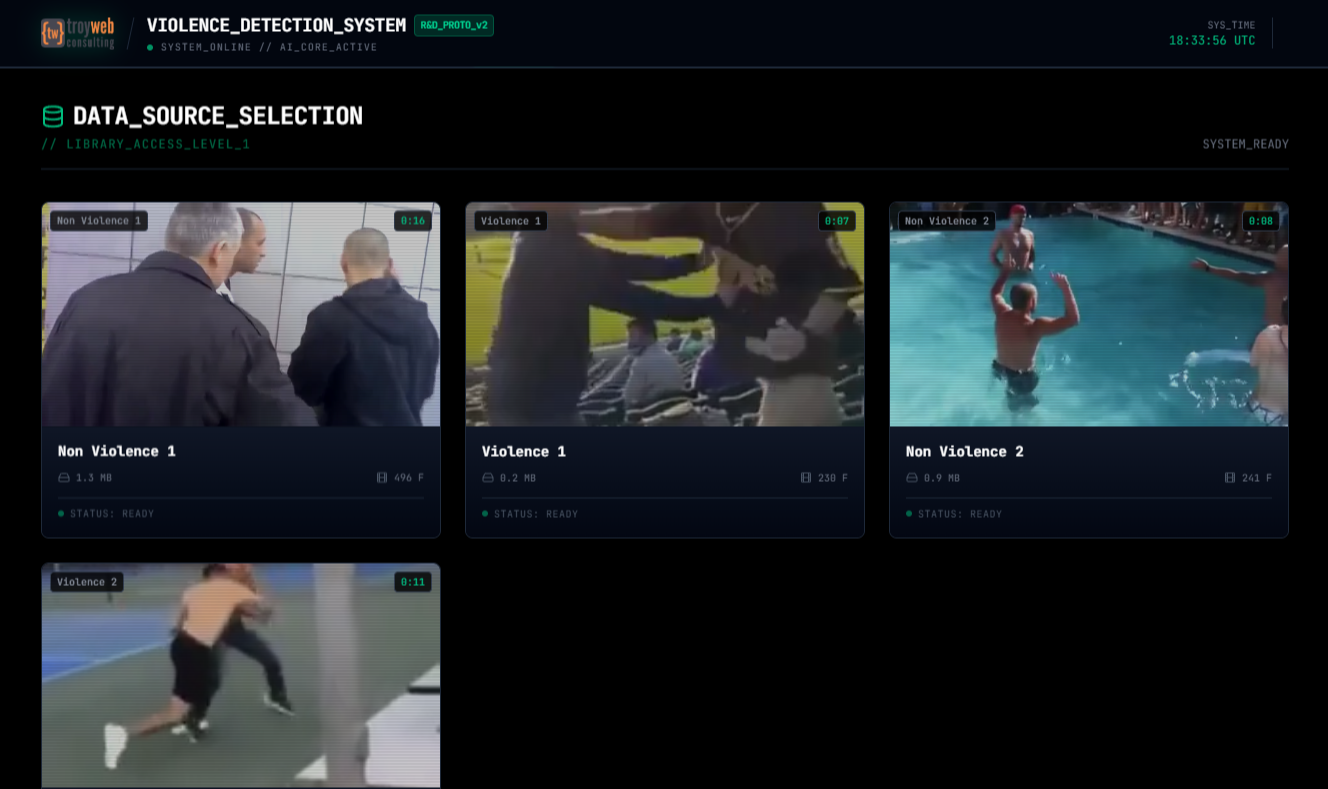
Validating Real-Time Safety: AI Violence Detection Prototype
Can a machine distinguish between a high-five and a physical altercation? We brought this question to The Lab to experiment on which resulted in a functional Computer Vision prototype.