



Protecting Our Water: A National Standard for Energy Regulation
A robust, web-based data management system that empowers West Virginia regulators to track, manage, and remediate over 114,000 oil and gas wells, ensuring environmental safety through data transparency.
Services Provided
- Custom Application Development
- Software Modernization
Industries
- Government
- Energy & Environmental Regulation
114,000+
Wells Managed
Migrating West Virginia's legacy data to a unified platform, covering 55,000 active and 12,000 inactive wells.
22+
State Standard
Leveraging the Risk-Based Data Management System (RBDMS), a national core set of software used by over 20 states to inform policy.
35+
Key Users
Empowering a specialized team of engineers, geologists, and field inspectors to move from manual spreadsheets to digital workflows.

The Challenge
High-quality groundwater is essential to our nation. The Groundwater Protection Council (GWPC) works with state agencies to protect this resource by regulating oil, gas, and injection-well operations. However, regulations vary by state, making it difficult to identify national trends or compare safety data across borders.
The West Virginia Department of Environmental Protection (DEP), specifically the Office of Oil and Gas (WVOOG), was struggling with a fractured data landscape. They relied on a legacy Oracle system ("ERIS") and a patchwork of disparate spreadsheets and databases to track regulated facilities.
- State-by-state regulatory variation made it difficult to identify national safety trends
- Legacy Oracle system ("ERIS") couldn't meet modern data management needs
- Critical facility data scattered across disparate spreadsheets and disconnected databases
- Need for a unified system serving both state-specific and federal reporting requirements
Our Solution
TWC partnered with the GWPC to implement the Risk-Based Data Management System (RBDMS). Instead of patching the old system, we replaced the current Environmental Resource Information System (ERIS) with a robust RBDMS.NET platform. We consolidated the disparate tools—spreadsheets, apps, and isolated databases—into a single, streamlined ecosystem.
We customized the core software to fit West Virginia's specific needs. This included building new capabilities for water tracking and enhancing field inspection features, allowing agents to log data directly rather than wrestling with paper backlogs.
Legacy Modernization
Replaced fragmented Oracle system with unified RBDMS.NET platform
Custom State Features
Built water tracking and field inspection capabilities for West Virginia's unique needs
Agile Implementation
Hybrid development approach navigating complex regulatory requirements

Outcomes & Impact
Transitioning to the unified RBDMS platform has streamlined regulatory operations and enhanced public transparency, establishing a scalable model for environmental protection that now serves as a benchmark for states nationwide.
114,000+
Wells Managed
Covering 55,000 active and 12,000 inactive wells in West Virginia
22+
State Standard
RBDMS used by over 20 states to inform policy
35+
Key Users
Engineers, geologists, and field inspectors empowered with digital workflows

West Virginia can now share data and resources that didn't exist before, with improved access and security for oil, gas, and well information statewide thanks to the RBDMS system.
Ground Water Protection Council (Oklahoma)
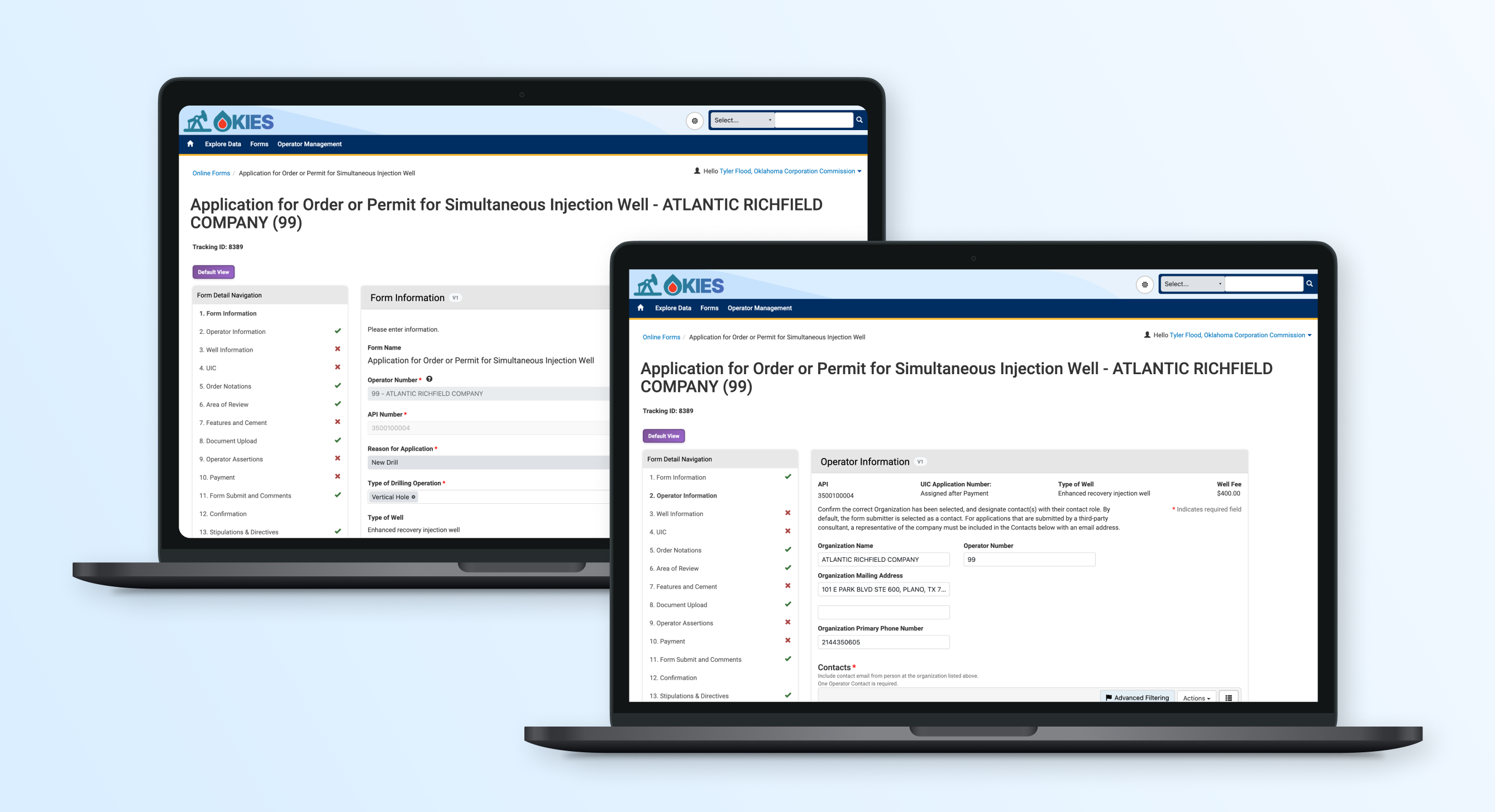
Modernizing Regulatory Workflows: Expanding the RBDMS Risk Based Data Management System
We worked with The Ground Water Protection Council to modernize the state of Oklahoma’s regulatory permit process and field inspection system on the RBDMS platform. This involved digitizing complex paper forms for the full well lifecycle (from initial permitting to end-of-life plugging) and upgrading the core architecture to deliver a precise, validated platform for enhanced environmental oversight.